

You never cared about anything in your life
Thoughts on The Palm House, by Gwendoline Riley
It’s book club week, with THREE nights of discussion for Gwendoline Riley’s eighth novel, THE PALM HOUSE. This is a long one, so get a coffee and get comfy. Spoilers ahead!
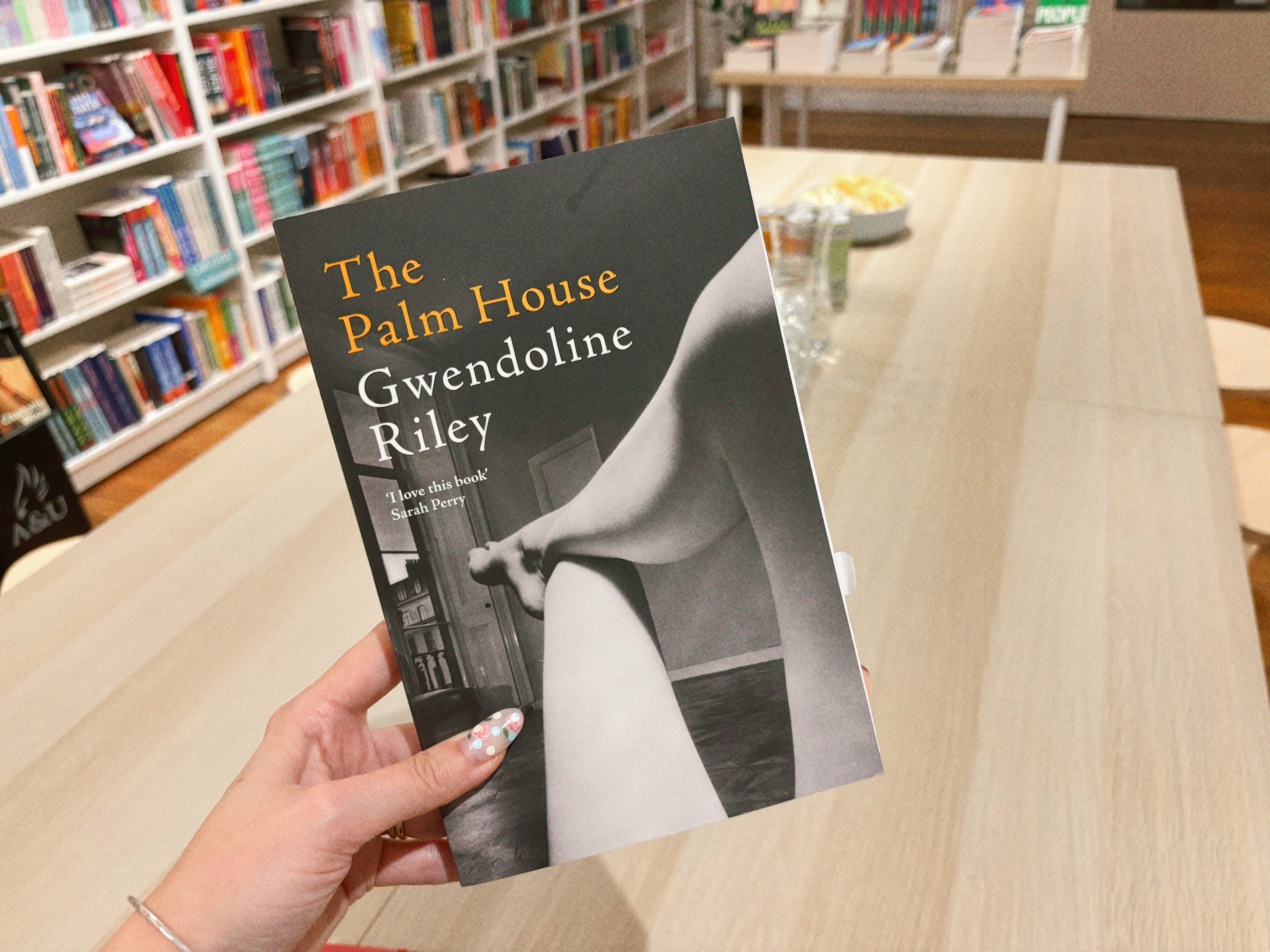
Edmund Putnam, days away from the end of his 50th year, finds that his solitary life is about to change. The magazine to which he has given his best decades faces closure, and Edmund will likely lose his job this coming Monday morning. But before this fateful prospect can arrive there are others, no less daunting: a date, and a birthday.
Putnam’s great friend, Laura, worries for him. She is a decade or so younger, employed by the same magazine but with the prospect of escape; she has been offered the opportunity to leave the country and work abroad. But can she bear to take it?
Meanwhile Putnam’s father, Martin, has found a new lease of life. He has fallen in love with a waitress at a local cafe, and decided to rescue her from her brutish husband.
Unfolding over the course of a single weekend, as these three drifters assess their fates and their futures, THE PALM HOUSE reads between the lines of modern life in a country slipping back into its past, and presents Gwendoline Riley at her heartfelt, bravura best.
-
This month’s pick garnered some OPINIONS - which I love in a book club and is something I think a lot about when I’m picking books, and when I’m choosing what order they go in and how we can discuss them.1 I had a few pre-meetup instagram messages about this one from both Brisbane and London, and one of our famous fence-sitters (she won’t mind my saying that, it’s a title she’s given herself) stood very strongly on a particular side.
Fwiw, I loved this - I love Riley’s writing, I love how sparse her stories are, how much they look like just very realistic conversations between people, but everything is simmering underneath, and often so much goes unsaid. I love her descriptions - “paper gift bags jinked like fish.” I fully went in expecting to love it, because I loved MY PHANTOMS, her 2021 novel about a woman’s difficult relationship with her mother. THE PALM HOUSE explores similar themes; Laura is a Northerner living in London (as many of Riley’s female, mid/late-30s protagonists are and do) as a somewhat struggling journalist (or maybe just with a print media career in the late-00s). Her friend Putnam is ten years older, their friendship forged at the magazine he works at, for which she’s written a few pieces, and then moved to regular debriefs over after-work drinks, or “old-school vegetarian” dinners he likes to host. The magazine is newly under the steer of an inept new boss (aptly nick-named “Shove”) in a last-ditch bid to keep its print edition alive, to the chagrin of Putnam and his colleagues. The novel is split into snippets of conversations between Laura and Putnam (often opening mid-sentence, over shared packets of crisps) and Laura’s recollections of her formative, teenage years, growing up with her mother and grandmother.
I have read two blurbs of this novel - the one above from the Pan Mac Australia website, and the entirely different one on the back of the Picador edition - and I don’t think either accurately captures the book. We had LOTS to say about the blurbs.2
-
Across the three meetups at the shop, I think it worked out to about a 70:30 split on ‘liking’ the novel. Importantly, I think, there was a big distinction between not liking the book and not thinking it was good. Almost everyone who said that they didn’t like it said that the writing was beautiful and that’s what kept them going despite finding the characters unlikeable or missing the anchoring of more plot.
A side note for bookclubbers: don’t ever apologise for hating a book! If everyone likes everything every time, I’m not doing my job properly. There’s far more to talk about in a room with strong feelings.
-
One thing I’m most enjoying about hosting multiple meetups on the same book is how different the conversation sounds each night. One was heavy on the relationship between Laura and her mother (the cover blurb does mention a “prickly mother,” and that really is putting it lightly)
What she meant by that wasn’t clear. We none of us ate together; we each took a tray up or through. But my mother was very brisk, very efficient. She liked to describe herself as ‘outward-facing’: a funny phrase, but accurate when I think about it.
There are moments with Laura’s mother where she seems almost to be in competition with her daughter, and moments between the two of them which could be seen as naïveté at best, or malicious at worst (I’m thinking of fifteen-year-old Laura being caught admiring herself in the bathroom mirror wearing new lingerie, and her mother remarking that Chris will like it). On the generous side, there was the idea that Laura’s mother wanted to be more of a friend than a parent. Their relationship now that Laura is an adult is a fragile thing (“better over the phone” than in person, where the pressure of attention is too much), but Laura often admonishes herself for being mean to her mother, and defends her from Putnam’s snobbery against Northerners.
Laura has met up with her mother [who has] been laid off and says—flippantly—that she might spend the time revisiting all the places she’s lived, “just as a project.” Laura suggests that it “could tell a story . . . a bit of social history. Where life has taken you.” The conversation drifts. The subject is dropped. Only later do you realize that “The Palm House” moves past and into the houses and flats that Laura’s inhabited. Her mother’s idea was good.
Gwendoline Riley’s New Novel Surveys the Wreckage of Middle Age, The New Yorker
-
One group picked up on the dread in Laura’s last interaction with the friend of a friend she’s staying with, and the realisation that despite her flat affect when recounting the sexual trauma inflicted on her as a teenager, it really has coloured her adult experience:
When we read of Chris—a man with crinkly eyes and a habit of breaking into a cartoonish Cockney accent—sexually assaulting her, the memory isn’t meant to explain away her psychology, to complete her, as in a standard trauma plot; it’s narrated in the same cool tone as her other recollections, be it a palm reader curing her hand warts in Croatia or having to resort to smoker’s toothpaste at Lawrence’s crumbling mansion.
-
When we were talking about what the novel is actually about, place came up a lot across the meetups, and specifically the ways that the male characters treat their physical spaces, vs Laura’s homes, and the eventual studio she’s bought herself. Her childhood home is shared with her mother and grandmother, though ‘shared’ is a loose term; they don’t eat together, her mother has her own, separate, sitting room, and they mostly all keep themselves entertained in their own ways. Laura’s shocked by the squalor of Chris Patrick’s home when she makes her way there:
It wasn’t clean, though. There was a bad smell. Out in the courtyard, the plants were dead. […] The bedroom, too, was filthy. There were foot-long snakes of dust on the floor. The sheets were half off the bed.
Later, when she’s seeing Lawrence:
The bathroom had a Miss Havisham aspect, with dust on the taps and geological accretions around the sink, and in the toilet bowl. There were old, empty bottles on every shelf and surface, and dirty cotton wool balls and used cotton buds.
In comparison, Putnam - Laura’s most stable male interaction - is an excellent cook, preparing his ingredients and setting them out in little dishes, like a TV chef.
The flat was immaculate. No clutter. No fuss. No plastic.
Despite the dread which creeps into Laura’s final interaction with Mitch, we should know that she’s in safe hands, because the man is a neat freak - his house is beautiful, pristine, without even a crumb in the kitchen.
The end of the novel sees Laura in her own flat at last, no longer house-sharing, and she is noting the mould in the corners of the bathroom as she lies contentedly in the bath, having just had the boiler mended.
I was trying to fix things as they came up.
-
Sarah Jessica Parker said the novel was “revelatory”
Other things our bookclubbers have been reading and recommending this month…
YESTERYEAR, by Caro Claire Burke // FAMESICK, by Lena Dunham // THE LEFT HAND OF DARKNESS, by Ursula K Le Guin // REJECTION, by Tony Tulathimutte // THE PASSION ACCORDING TO G.H., by Clarice Lispector // HOOKED, by Asako Yuzuki // MOTHER NIGHT, by Kurt Vonnegut // SKY DADDY, by Kate Folk // THE NIGHTS ARE QUIET IN TEHRAN, by Shida Bazyar // STRANGERS, by Belle Burden // BETWEEN YOU AND ME, by Joanne Horton // INSOMNIAC CITY, by Bill Hayes // LEAVING THE ATOCHA STATION, by Ben Lerner // ON THE CALCULATION OF VOLUME, by Solvej Balle // OF SORROW AND SUCH, by Angela Slatter // LÁZÁR, by Nelio Biedermann // LIFE DRAWING, by Emily Lighezzolo // HOMEGOING, by Yaa Gyasi // THE POWER BROKER, by Robert Caro // UPSTREAM, by Mary Oliver // GIOVANNIS ROOM, by James Baldwin // HYMN TO LIFE, by Giselle Pelicot // MURDER BIMBO, by Rebecca Novak
Have you read anything by Gwendoline Riley?
In June, we’ll be reading PHANTOM DAYS, by Angela O’Keeffe, which will have 10% off in store through April. The last remaining tickets for our book club meet-up(s) are available here.
The book club books are picked a few months ahead - I’m up to September. I try to have a couple of things that link one book to the next, or that call back to other things we’ve read; a few through-lines at a time, despite the books being new picks/cult classics/translated/small press/etc and maybe without obvious connections. It’s fun; like a little puzzle. The link from the last pick was ‘containers,’ the link to the next one is ‘mothers’.
Re the website blurb: (Edmund) Putnam will likely lose his job on Monday, for instance, because he has resigned. And his father has died some months before the book even begins, making it fairly difficult for him to currently be finding a “new lease o[n] life,” or “assess[ing his] fates and futures.” None of us thought it had “unfold[ed] over the course of a single weekend.” Is it AI??