

What I read in August
I just doubled the number of books by men I’ve read this year.

Hello!
I’m making my way through some of the Booker longlist — I’ve not been able to get my hands on everything, but I tracked most of them down. I think it’s a good mixture! What did you think? Also, if anyone’s going to the FIRST EVER (!) shortlist event at the end of September, know that I’m very jealous.
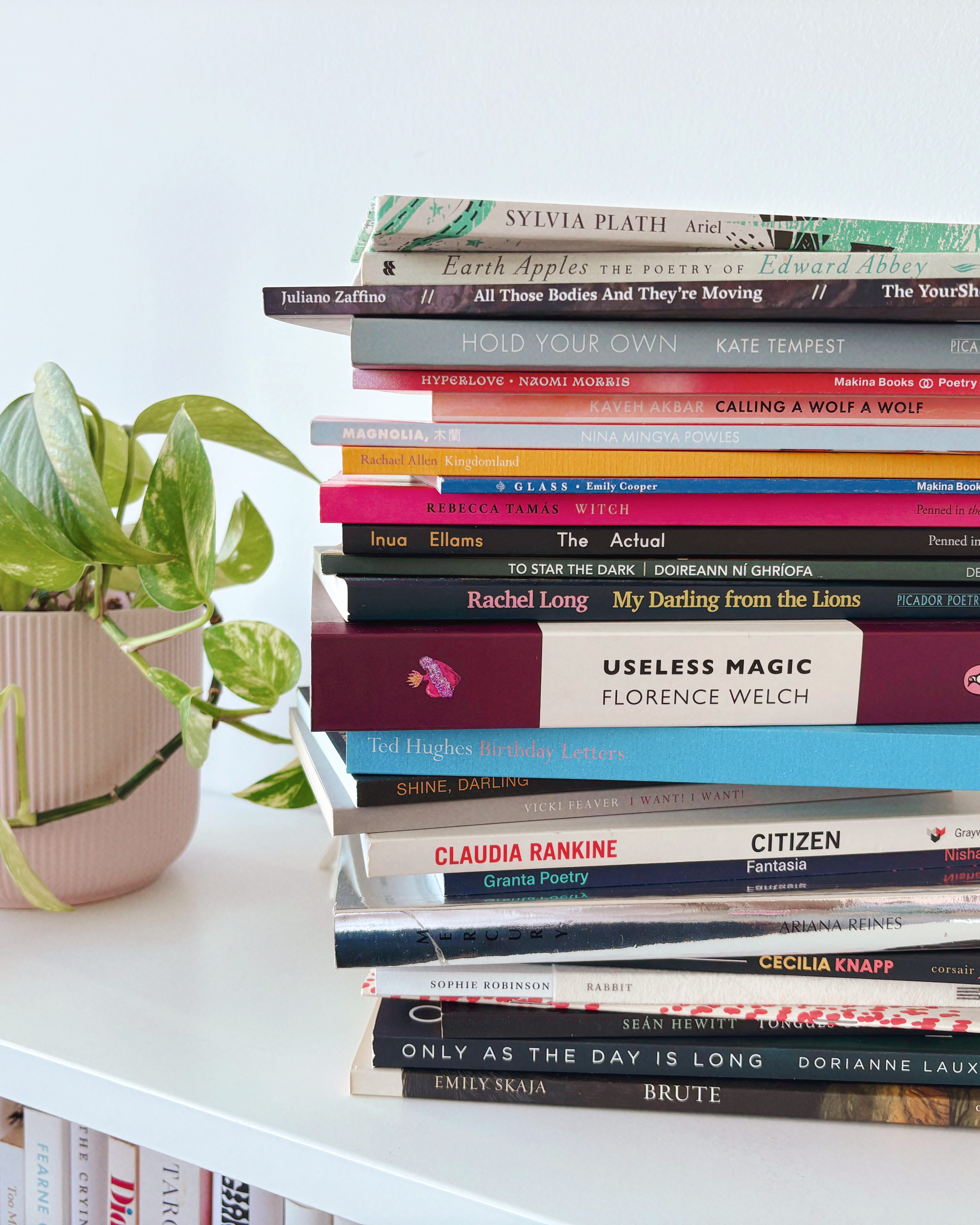
I did The Sealey Challenge this month, reading a poem a day for all of August, which was nice and reminded me that it’s too long since I bought a new poetry collection. Luckily, I’ve now got a big list of poetry to get to from other peoples’ reading (mostly courtesy of
).

Books
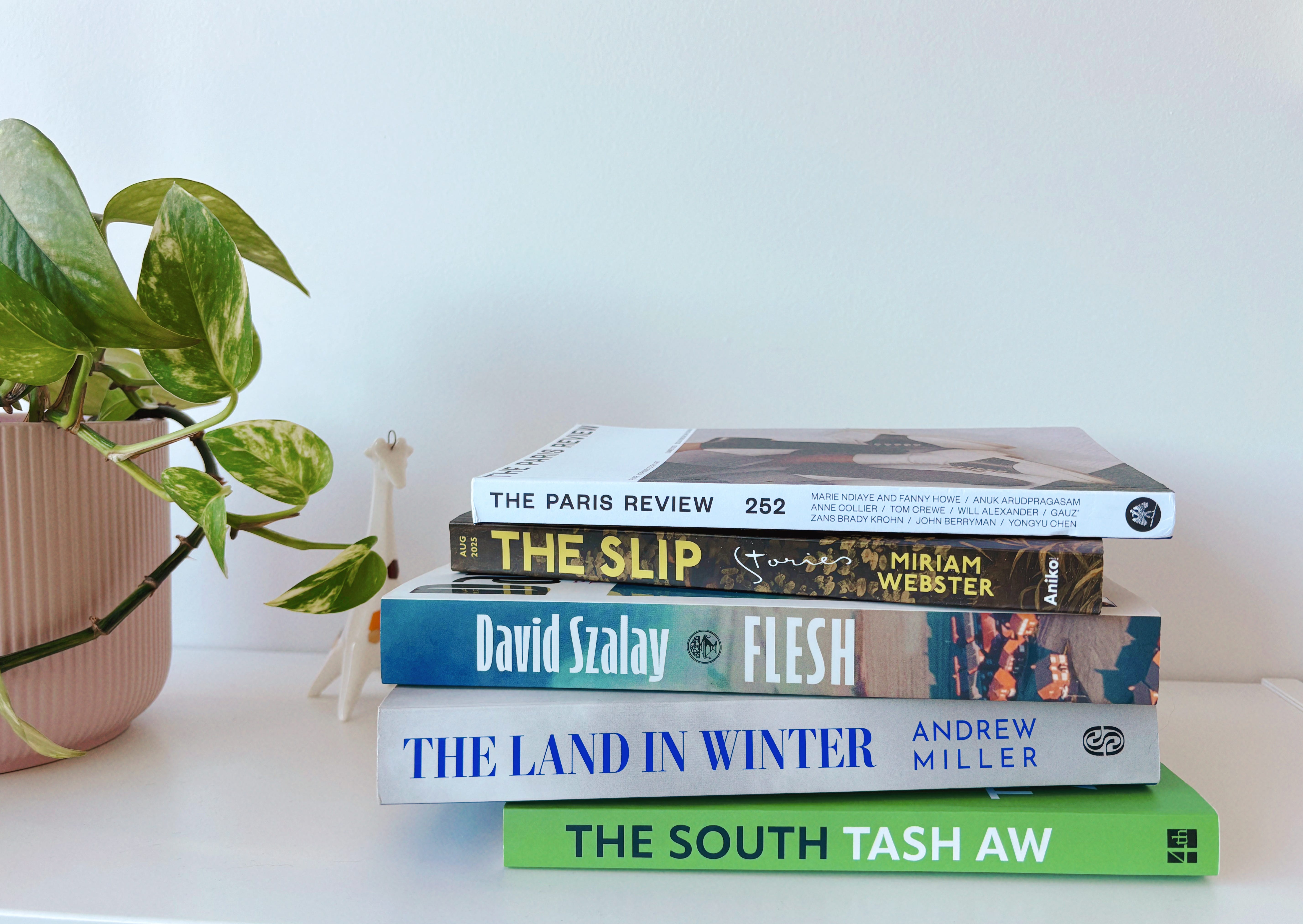
The Slip, by Miriam Webster
I promised I’d come back once my review of this was published, so you can read it in The Saturday Paper, here.
TL;DR version: get a copy immediately.
The South, by Tash Aw
The first of my Booker shopping spree. I liked this more than I thought I would. It’s set over the course of a 1990s summer spent in rural Malaysia, where sixteen-year-old Jay and his family are renovating the dilapidated farm left by Jay’s grandfather after his death. Jay’s father, Jack, is reunited with his estranged half-brother, Fong, and differences between the two are more stark than they ever have been. While Jack is a celebrated maths professor in the city, Fong is the illegitimate child of their father and his long-term mistress, and has spent his adulthood barely managing the farm and solo-parenting his own son, Chuan. The brothers’ differences in education and wealth are distilled again in their sons, but while Jay and Chuan have almost nothing in common, there is something else between them.
Written from the perspective of an older Jay narrating in both first and third person, with occasional 4th wall breaks to ask of the reader (and his younger self) what they might know about love or classism or the differences in their lives as they’ll grow older, Aw nonetheless captures both sides of Jay and Chuan’s relationship as it builds. Jay is infatuated from the start, embarrassed by his inexperience of love, teased by his older sisters, while Chuan, only slightly older at nineteen, is more sure of himself and his place in a world he is desperate to escape from.
It is quite sparse though, and with lots of distance between the characters — and obvious limitations put on fleshing out other characters by having Jay the adult narrating — there were parts I wanted more of. Jay’s mother is such an interesting character, but there’s not enough of her; Jack was her schoolteacher, and their marriage is quite cold at points, but the farm has been left in Sui’s name, not to either brother. Her relationship with Fong is interesting, we see a snippet of it when they go to the market together and it’s an easy friendship, almost a better pairing than Sui has with Jack. Similarly, Jay’s sisters are quite flat characters; one is an artist, one a fearful girl who barely leaves her mother’s side. For all the intimacy of Jay and Chuan’s connection, it does feel like it’s at the expense of engaging with other relationships and tensions in the novel.
With that said, though, this is the first of four planned novels in a family epic, so perhaps while the focus of THE SOUTH is as a queer coming-of-age, sequels might look elsewhere.
The Land in Winter, by Andrew Miller
Another quiet Booker book, but I really liked this. Two couples — Bill and Rita, and Eric and Irene — live on neighbouring farms in the early 1960s. They are different in every way: Eric is the village doctor, well-known and well-respected, his wife Irene is the perfect post-war housewife, part secretary, part maid. Their house is heated with a fancy new system and Eric has bought himself a zippy little Citroen he seems to love more than his wife. Bill and Rita have recently moved to the run-down cottage across the field, where Bill has shucked off his wealthy family to become a farmer. Rita, an ex-bar girl, is playing at being a farmer’s wife, though she feels she’s not very good at it. They are newly married and sometimes still unsure of each other, and to outsiders they seem brassy and brash. Rita is isolated from her city life, and while Bill is educated, he’s clueless, and his flash new car has rubbed the doctor the wrong way. When the two women discover that they’re pregnant only a month apart, a tentative friendship blossoms.
The first half of the novel sees the four mostly in their interactions with others, but after a successful New Years’ party at the doctors’ house, the winter turns unseasonably cold, the domesticity of their lives comes up to the front, and the novel really shines. As it turns out, Eric is a bit of a shit (no spoilers, it’s obvious from the first page), Bill and Rita are great, and everyone has got interesting back stories and inner lives. It has a sadder ending than I hoped for, but perhaps not an unexpected one.
The Fête, by Tom Crewe
A little break from chunky novels for a reset: This short story is just perfectly crafted and you can read it over lunch. I read it in The Paris Review, but it’s available online too.
Flesh, by David Szalay
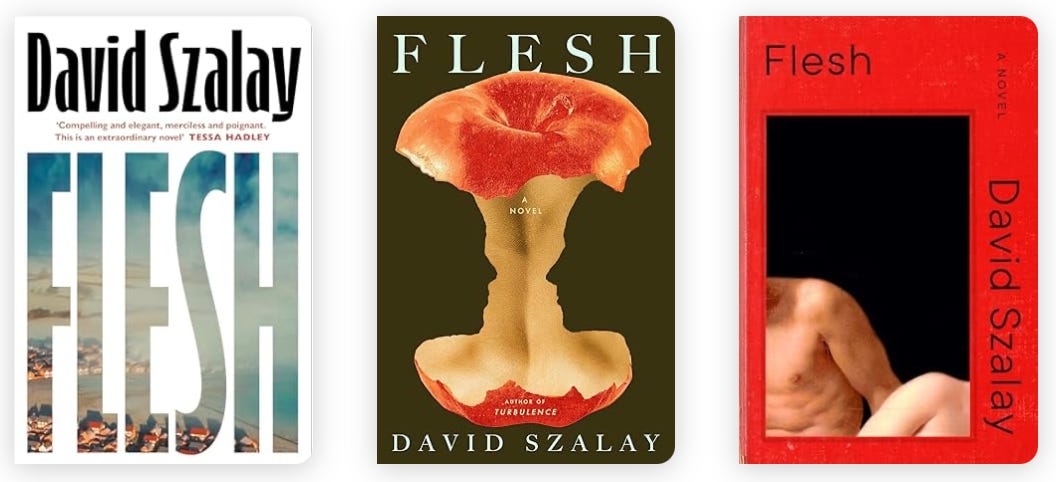
Now that I live in Australia, I often see different publisher versions of the books my friends in London are posting on insta (the Text vs Fitzcarraldo Olga Tokarczuk is a good example — I loved the Text cover of THE EMPUSIUM, vs the Fitzcarraldo blue — or Michelle De Kretser’s THEORY AND PRACTICE) and I think it’s so interesting to see how it changes the perception of the book. These are the top three that popped up for FLESH (I’m reading the first white/blue one), but they genuinely look like totally different genres. Anyway!
Following István throughout his life, first as a teenager in Hungary, to a stint in the army, to his job as a doorman in the seedy side of London, to his rise through the upper classes. I… didn’t love this. I’ve heard amazing things about it, but for me it was just too detached, too convenient. The novel is, ultimately, hinged on the idea of being in the right place at the right time, and for me it was just a little bit too far-fetched. István is so secondary in his own life that everything just happens to him, and there’s no engagement with how or why, or any responsibility. The writing is beautiful, the last line is a stunning ending, and Szalay manages to hop through István’s adulthood at a truly cracking pace (I read this one in two days), but the plot seems honestly baffling in parts.
Maybe I’m being harsh because I read this straight off the back of loving THE LAND IN WINTER, and I finished it, and enjoyed the writing even though I found some of it beyond belief. No spoilers, but PLEASE let me know if you’ve read it and you know where Foyles is.
Another side note: Three books in a row by male authors is more than I’ve read for a LONG time (and has doubled the number of books by men I’ve read this year). Where’s this supposed dearth of male fiction??
Other things: I read A LOT of poems for The Sealey Challenge. They’re all up on notes, or over on insta.
Online reads
Samanta Schweblin on paying attention to what others ignore (The Yale Review)
and then I read this which felt synchronistic:

I loved this essay on Vincenzo Latronico’s PERFECTION, which I read last month:

Terri-Jane x